The State of Running: Key Insights Shaping the Sport Today

Running has never been more popular, and the sport is evolving faster than ever. From record-breaking marathons to the surge in running groups and clubs, the landscape is shifting not just in numbers but in who is running, how they train, and what they expect from events and brands.
This article distills the key trends shaping running today: generational shifts, increased female participation, trail running, tech adoption, and recovery culture, and explores their impact on the sport in 2026.
Drawing on industry reports, participation data, and insights from runners, organisers, and brands, we look at the state of running now and what’s on the horizon.
Racing has never been so popular
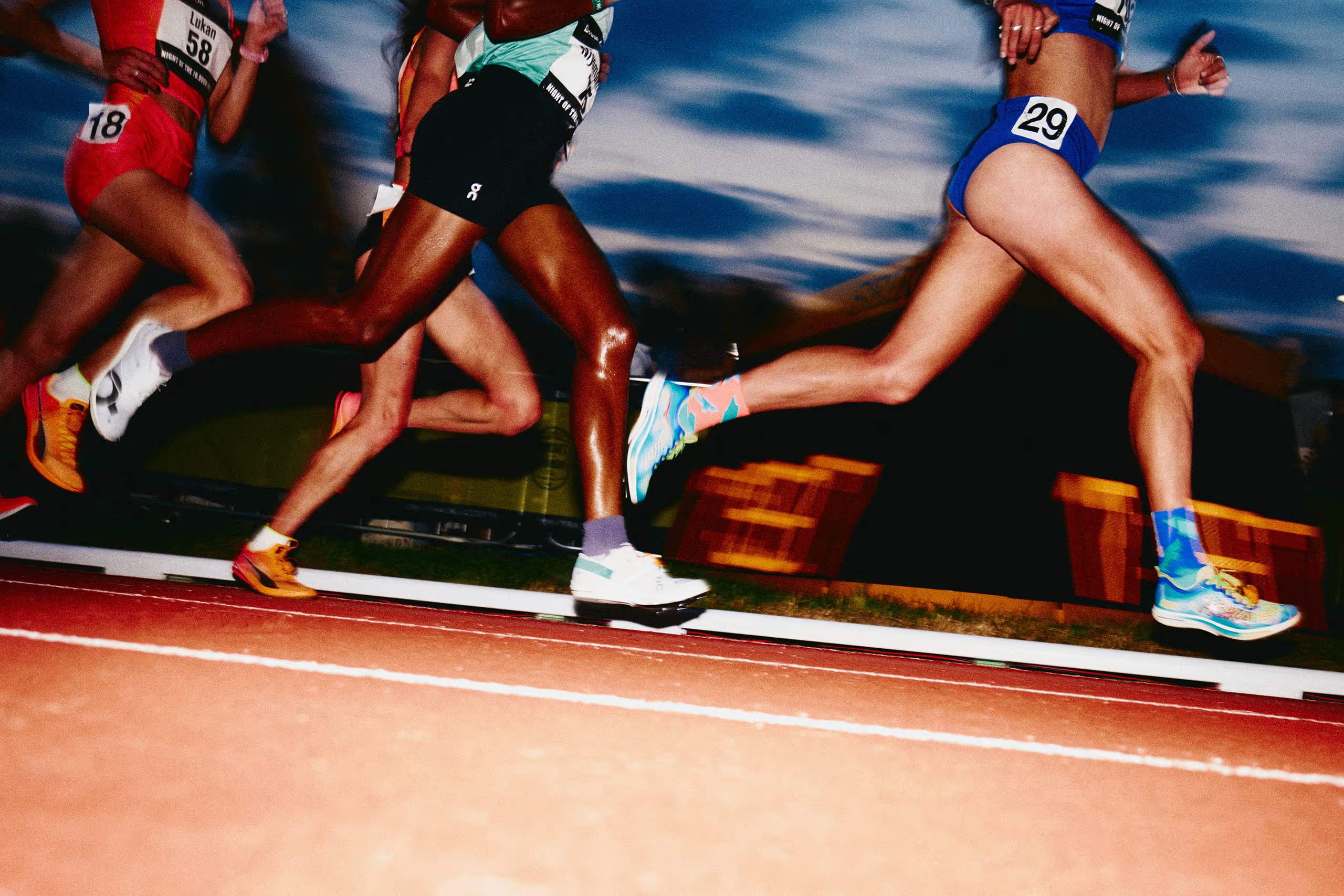
Securing a marathon place now feels less like entering a race and more like winning one. From record-breaking ballot entries to international start-line tourism, and even sell-outs at local, independent events, demand for races is showing no signs of slowing.
The London Marathon alone broke a new record last year, with over 1.1 million people from the UK and across the globe applying for just 20,000 public ballot spots – odds of roughly one in 66. According to London Marathon organisers TSC, the number marked a 36% increase on the previous year.
And this is far from a UK-only phenomenon. On the other side of the world, the Sydney Marathon – confirmed last year as the seventh World Marathon Major – attracted more than 123,000 ballot applications for its 2026 event. Destination NSW said that it represents a 56% increase from 2025, which saw almost 34,000 finishers from 117 countries, cementing its position as one of the fastest-growing marathons globally.
But participation numbers only tell part of the story. Where races used to be transactional (turn up, chase a personal best, collect a medal, and go home), they’re now immersive, socially layered experiences. Branded shake-out runs fill city streets the day (or even the entire week) before, expos have evolved into retail theatres and community hubs, and travelling abroad for a race is no longer niche; it’s increasingly how runners choose to explore the world. In short, racing has become experiential.
For brands and event organisers, this shift changes the opportunity, as the modern runner isn’t simply buying an entry fee anymore – they’re investing in a weekend, a narrative, and a moment to share with others. But who is fuelling this surge in demand for racing?
The growth is widespread and generational. According to Strava’s Year In Sport report, more runners of every generation are pinning on a race bib, whether that’s for a 5km, 10km, half marathon, or marathon. However, Gen Z stands out, as they were 75% more likely than Gen X to say they were motivated by a race or event.
That appetite is translating into measurable growth, with the Mass Participation Report 2025 from Eventrac recording a 7.8% overall rise in race entries last year, while bookings via Find A Race increased by 5.5%. Eventrac highlighted that 80% of all website bookings were for running races, with half marathons and 10km races being the most popular. Endurance events such as ultra-marathons also drove strong growth, with a 15.19% increase from 2025.
Runners aged 35-39 were the single largest contributors to race entries. Yet that cohort remains male-dominated compared to the 20-24 age group, which is approaching near gender parity, signalling a generational shift in who feels represented on the start line. More and more females have been taking part in racing over the past three years, with increased accessibility, community-led training groups, and more inclusive event environments helping lower the barriers that once kept women from the start line.
One area, in particular, where this is key is within the ultra-distance scene, where historically it’s been very white and male dominated. However, several organisers of events are keen to shift this perspective.
Penny Welch, CCO at Threshold Sports said: “Threshold Sports will continue to invest in female participation, with a focus on first-time ultra runners. Our Ultra 50:50 gender parity campaign illustrates a clear case for making ultramarathon events more inclusive and attractive to female participants. By diverting marketing spend from paid advertising to a more purpose-led campaign and making reasonably modest investments in service provisions to accommodate the needs of female participants, we have been able to significantly increase participant numbers and the profitability of these events.”
This rise in female and younger runners is reshaping the racing culture. Women are not only increasing the numbers but also driving more inclusive experiences, while younger participants are taking part in multiple events per year with expectations on social connection, technology, and engagement.
Together, these shifts are moving racing from a transactional pursuit to a socially and culturally driven one, creating opportunities for brands and events to connect with runners in ways that go far beyond medals.
The running demographic is getting younger
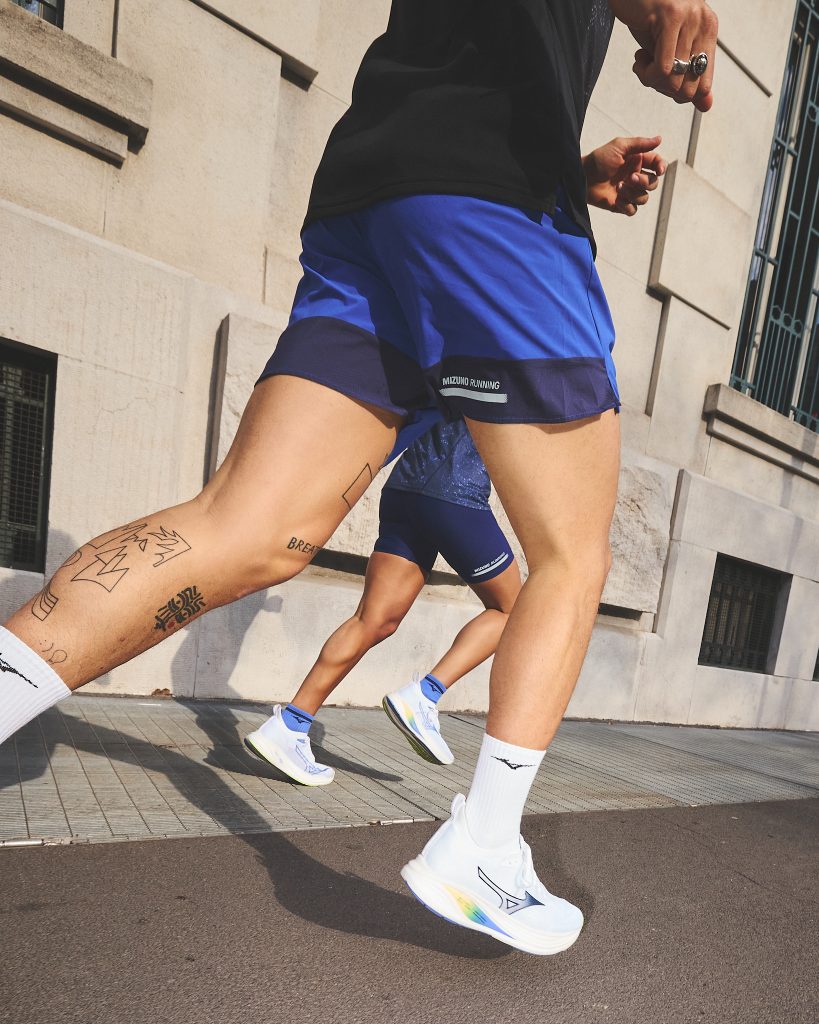
The profile of the “runner” is shifting younger, with Gen Z and Millennials increasingly stepping into the sport. And they’re here not just for fitness, but for connection, mental wellbeing, and identity. In the London Marathon ballot, one third of UK entries were from those aged 18 to 29 – an incredible 105% increase.
Younger runners are more focused on overall wellbeing, with running serving as a way to destress, manage mental health, and build routines around self-care. For many, it’s as much a lifestyle habit as a performance pursuit, and the motivations go beyond chasing personal bests that have long been associated with running.
Younger runners are also logging multiple runs per week. A 2025 report by LADbible found that 60% of Gen Z run weekly, blending solo sessions with club runs.
Run clubs have become a normal part of the running ecosystem, with brands, influencers, and athletes hosting weekly sessions for runners of all levels. They’re not always about speed or performance either – many clubs emphasise community, making running a more accessible and inclusive space. According to Strava, 37% of users find running clubs a good place to meet people, reflecting the boom of clubs. In 2025, Strava also reported a 3.5% increase in new run clubs being formed on the platform.
Run clubs provide individuals with accountability or training support, such as pre-marathon blocks, but they also offer social connection. This is especially important for younger runners. Research shows that those aged 16-29 are the demographic most likely to experience loneliness, with roughly one-third reporting feelings of isolation. In this way, running has become as much about community as it is about fitness.
With Gen Z more inclined to pursue activities that support wellbeing, they’re also more willing to invest in it. Thirty percent of Gen Z plan to spend more money on fitness in 2026, and 64% say they would rather spend their money on fitness than on dating. This highlights the growing commercial and cultural influence of younger runners, who are shaping not only participation trends but also the future of how brands, events, and communities engage with the sport.
Trail running is about distance and connection
Off-road running is another burgeoning discipline – in fact, it has reportedly seen a 231% increase over the past decade. However, its culture has been shaped differently from that of road running. Focused on adventure, being in nature, and racing to complete, not compete, trail running is opening up the sport to people who felt they didn’t fit the “road runner” stereotype.
Most notably, Gen Z (women in particular) are entering this area of running, with Strava seeing a 6.5% increase in trail uploads over three years.
Once perceived as a sport dominated by older, white males – due to experience, cost, and access – trail running is evolving into a long-term, inclusive sport as more runners of a younger age group take to the trails. Fuelled by a desire to reconnect with nature, feel more alive, and quiet a busy mind, trails have become a sanctuary in a post-pandemic digital world, according to Common Ground’s The New Trail report.
Lory Louves, Aspire PR’s Cultural Insights and Strategy Manager, has been trail running for the past couple of years and said, “It has been the most interesting, inspiring and rewarding journey so far. I was part of a very diverse community which created an experience like no other but equally far from the reality of the sport. Of course, being able to discover new grounds, finish races and collect medals has been amazing and I’ve gotten to learn more about myself and my body.
“But it has also been an eye opening experience where I felt very privileged to have had an invitation and a community to take me in. My friend Dora and I have been working on creating something of our own to hopefully create the same accessibility for people from the global majority, people who look like us.”
Unlike road running, trail running isn’t focused on performance, and as a result, it’s morphed into a lifestyle. Runners plan trips around trails, seek experiences that combine travel, community, and wellness, and integrate trail running into broader wellness routines.
The social element is key, too – group trail runs, guided experiences, unique races, and trail-focused communities provide connection and inclusivity, while the non-competitive ethos makes it an accessible sport to newcomers.
It has become such a lifestyle that trail running has its own unique aesthetics, characterised by looser, more colours, and DIY elements. Even clothing is representing this cultural difference with a number of niche brands launching over the past few years, as well as experiences around trail running becoming festival-style events for those who want more than just a race.
This lifestyle mindset also fuels the rise of destination travel – Strava found that 40% of users went trail running whilst abroad. With adventure being one of the main attractions for trail running, doing this whilst in a new place only further strengthens trail running as a way to explore the world and see areas of natural beauty. This is also an experience to have with friends, family, or like-minded individuals, adding another element of reconnection, this time with others, in the present moment.

AI is welcomed in running
tech has been on runners’ wrists for years. However, these devices now track more than pace and heart rate – wearables are now offering recovery insights and load determination (readiness score, strain, etc.).
Last year, Suunto launched its AI-powered training plans, offering personalised training plans tailored to an individual’s fitness level, schedule, goals, and available time. Suunto Coach also bases training on load data based on ZoneSense intensity, and a Recovery State that combines heart rate variability, sleep quality, subjective feeling, and training history.
Personalised plans are one element. AI is also enabling runners to predict race times, time meals around training, and even suggest a popular route to try in someone’s exact location. Once you’ve hit stop, too, AI can interpret how well a session went with elements such as Strava’s Athlete Intelligence or Whoop Coach.
It’s being embraced, too. Strava found that 46% of users would utilise AI as a smart coach for sports and that Gen Z is embracing AI for coaching at a higher level than any other generation. For a demographic already immersed in the digital ecosystem, AI is not seen as intrusive; it’s seen as empowering for runners.
Rather than replacing traditional coaching, AI is becoming an additional layer, enhancing personalisation and lowering the knowledge barrier and cost for new runners. As the sport becomes more data-informed, the opportunity for brands lies not just in the hardware but in intelligent and intuitive ecosystems that support runners before, during, and after sessions.
Recovery culture is part of training, not an afterthought
With runners viewing running as a lifestyle, the role of recovery becomes more prominent. Over the past few years, injuries, balance, and burnout have become part of the conversation. As a result, recovery practices now firmly have their place in people’s weekly schedules, rather than simply being something they address when something goes wrong.
Technology has accelerated this shift, with AI and wearable tech enabling runners to view their recovery in real time. Athletes, therefore, can actively adapt their sessions based on how their body is responding to their actual training load, then sticking rigidly to a training plan, even when they’re feeling fatigued.
Mobility work, strength training, breathwork, cold water immersion, red light therapy, fuelling, and sleep optimisation are also recovery tools we see being used more and more. Social media has helped to normalise this with athletes and influencers speaking more often about what they’re doing to “train hard, recover harder”.
People have access to such tools and locations, which has also increased the importance of recovery. Wellness hubs with hot and cold therapies are popping up across towns and cities, and tools can be purchased online and delivered to your door.
Even shoes are growing in the recovery market. OFOOS launched in 2011, but over the past year, a range of recovery shoes have been brought to the market from major brands.
For younger runners in particular, this reflects a long-term mindset. The ambition is not to simply peak for a single race, but to run consistently for years to come. Recovery has become part of the progress, not a pause that has long been feared in the running community.
What’s next?
The next phase of growth will likely be driven by convergence; experiential racing will meet smarter technology; trail and destination running will continue to blur the lines between sport and travel; AI will make coaching more accessible; recovery culture will support sustainability in participation; and gender parity will become the norm, not a milestone.
But perhaps the biggest factor for the future is that the runner will not fit a single stereotype. Current trends point to a younger, digitally native, wellness orientated, and community-driven demographic, but we’re also seeing a rise in older age groups. Brands and events can therefore no longer speak to one type of “runner” – messaging, products, and events will now have to find a voice that talks to the first time 18 year old, the 40-year-old mum, or the 60 and above grandad who is running for longevity and health.
”Running has become much more than a sport,” said Layla Smith, Aspire PR’s Founder and Managing Director. “For many people, it’s a way to clear their head, manage stress, and connect with others in real life. That sense of community is a big part of why participation continues to grow.
“Looking ahead, we’ll likely see running blend even more with other parts of people’s lives – travel, adventure and wellbeing. Runners aren’t just chasing PBs anymore; they’re looking for experiences, new places to explore, and communities where they feel a sense of belonging.”
This feature was created in collaboration with freelance journalist and outdoor storyteller India Paine.
For enquiries or collaborations, contact hello@aspirepr.co.uk.
You can also subscribe to our newsletter to keep up to date with our latest news, projects and insights.